
In Nigeria’s fast-growing digital economy, founders are building products that must operate in a challenging environment with inconsistent internet, rising operational costs, global competition, and users who expect speed, reliability, and simplicity from the outset.
Your tech stack determines whether your startup scales or crashes.
It’s not just about what your developers prefer.
It’s about selecting tools that align with your business goals, budget, team structure, and long-term vision.
This guide breaks down what Nigerian founders must consider when choosing a scalable tech stack in 2026.
What exactly is a “Tech Stack”?
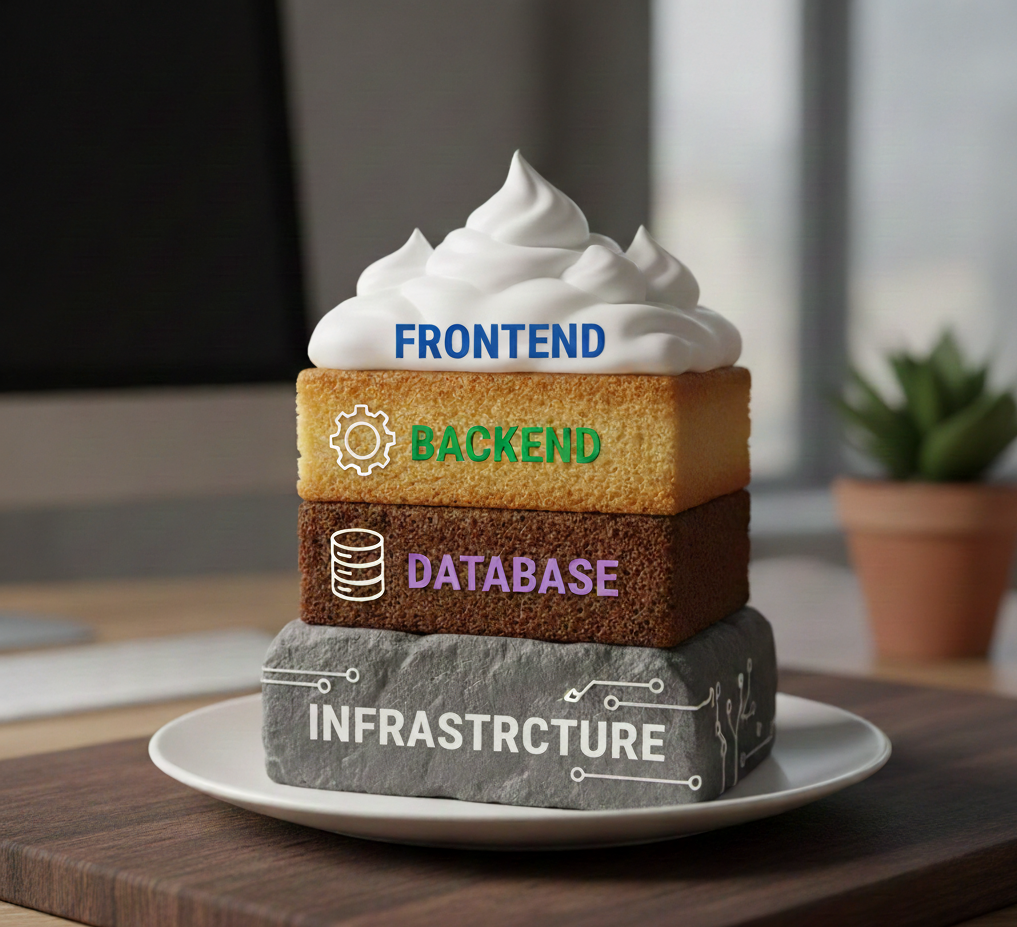
A tech stack is the combination of tools and technologies used to build and run your product. It typically includes:
- Frontend (user interface): Tools used to build what users see and interact with on a website or app. Examples: HTML, CSS, JavaScript, React, Next.js, Flutter.
- Backend (business logic): Tools that power the behind-the-scenes functions like processing data, authentication, and API logic. Examples: Node.js, Express, Django, Laravel, Spring Boot.
- Database (data storage and retrieval): Systems used to store, organize, and access application data. Examples: PostgreSQL, MySQL, MongoDB, Redis.
- Infrastructure (hosting, DevOps, cloud): The environment where your app runs, including servers, deployment tools, and cloud services. Examples: AWS, Google Cloud, DigitalOcean, Docker, GitHub Actions.
- Third-party integrations (authentication, payments, notifications): External services added to your app to enable specific features quickly and reliably. Examples: Paystack, Firebase Auth, Twilio, Stripe.
Why the Right Tech Stack Matters for Startups
Startups thrive on speed, flexibility, and scalability. A poor tech stack choice can lead to:
- Slower development cycles
- High infrastructure costs
- Difficulty hiring developers
- Poor product performance
But when chosen right, it becomes a strategic advantage.
Start With Your Business Needs, Not Technology.
Founders often begin with the wrong question:
“What framework should we use?”
The correct approach is to begin with:
“What business problem are we solving, and what capabilities does the solution require?”
Your stack should reflect:
A. The Stage of Your Startup
MVP stage: prioritize speed, affordability, and ease of iteration.
Growth stage: prioritize scalability, performance tuning, and modular architecture.
B. The Team You Have
Choose technologies your developers can work with confidently.
A skilled Node.js team will outperform a struggling Go or Java team every time.
C. Your Budget
Some technologies demand higher hosting fees, more specialized developers, or complex infrastructure.
Match Your Stack to Your Product Type
Different product categories require different capabilities. Below is a curated guide for Nigerian startups:
A. Marketplaces and Platforms (eCommerce, Logistics, Services)
Recommended:
Frontend: React or Next.js
Backend: Node.js (Express/NestJS) or Django
Database: PostgreSQL
Payments: Paystack or Flutterwave
Hosting: AWS or DigitalOcean
Why: Marketplaces require reliability, real-time updates, secure payments, and structured data handling.
B. Fintech Products
Recommended:
Backend: Java, Go, or Node.js
Database: PostgreSQL
KYC/Compliance: Dojah, IdentityPass
Hosting: AWS with strict security configurations
Why: Fintech requires high security, data integrity, compliance auditing, and transactional accuracy.
C. AI-Driven Products
Recommended:
AI/Backend: Python (FastAPI)
Frontend: React or Vue
Infrastructure: GPU-optimized cloud environments (AWS, GCP)
Why: AI workloads depend on strong Python ecosystems and powerful compute infrastructure.
D. Media, Content, and Streaming Platforms
Recommended:
Frontend: Next.js
Backend: Node.js or Django
Database: MongoDB
CDN: Cloudinary or Cloudflare
Why: These platforms require optimized media delivery, flexible content structures, and fast caching.
Prioritize Technologies With Strong Local Talent
Nigeria has a deep talent pool for:
Node.js
React / Next.js
Python (Django / FastAPI)
Laravel
Flutter
PHP
Choosing a stack with abundant local expertise reduces:
✔ Hiring difficulty
✔ Salary inflation
✔ Dependency on foreign developers
✔ Project delays
This is especially important for early-stage teams operating on tight budgets.
Plan for Scalability From Day One
Scalability is not just about handling more users; it’s about an architecture that supports growth.
Key scalability considerations:
- Use cloud hosting instead of local servers (AWS, GCP, DigitalOcean).
- Implement modular architecture or a “modular monolith” in early stages.
- Use containerization (Docker) for easier deployment.
- Add monitoring and logging (Sentry, Grafana, Datadog).
- Adopt CI/CD pipelines for reliable releases.
Even if you don’t implement everything immediately, choose technologies that can evolve with increasing demand.
Cost Reality: Build With Nigerian Constraints in Mind
The Nigerian ecosystem requires founders to be mindful of:
- Dollar-denominated cloud costs
- SMS/OTP and API billing
- Internet variability
- Power fluctuations
- Payment gateway uptime
- Availability of affordable engineers
Choose a stack that allows you to maintain operations even during price fluctuations or infrastructure disruptions.
Avoid Over-Engineering
Many startups collapse under the weight of unnecessary complexity.

Avoid:
❌ Starting with microservices
❌ Using unfamiliar, trendy frameworks
❌ Overbuilding features for an unvalidated market
Start with:
✔ a simple backend
✔ a fast frontend
✔ a reliable database
✔ minimal third-party integrations
Your goal is to launch, learn from users, then scale.
The Tech Stack as Your Strategic Advantage
Your tech stack plays a central role in whether your startup will grow sustainably or struggle under pressure.
The most scalable Nigerian startups build with:
✔ the right technology
✔ the right team strength
✔ the right architectural foundation
✔ the discipline to build lean and scale wisely
Choosing the right stack is not a technical decision alone; it is a strategic business decision that shapes the future of your company.

Ready to build a scalable digital product?
Uptouch Media Labs helps startups design, architect, and launch technology solutions built for growth.
👉 Book your FREE consultation today to start your project.