
The Hidden Cost of Using Website Templates for Your Growing Business

At first glance, website templates seem like a dream solution for small business owners. They’re affordable, quick to launch, and often marketed as “ready-made” solutions that can get your brand online in no time. 

With platforms like WordPress, Wix, and Squarespace offering thousands of options, it’s easy to see why many startups and entrepreneurs are drawn to templates. But as your business begins to grow and evolve, these cookie-cutter solutions can start to crack at the seams—quietly costing you time, money, and opportunities.

At Uptouch Media Lab, we’ve seen this firsthand. Many clients come to us after struggling with the limitations of templates. What seemed like a shortcut ends up becoming a costly detour. In this blog, we’ll break down the hidden costs of using website templates and why a custom-built website is often the smarter long-term investment for a scaling business.

1. Limited Flexibility Hurts Long-Term Growth

Most templates are built with general users in mind. 

That means they try to offer a “one-size-fits-all” structure that can accommodate different industries and business types. While this might work temporarily, the lack of flexibility quickly becomes obvious when your business requires specific features. 

Whether it’s advanced booking systems, custom pricing logic, third-party integrations, or dynamic content sections, templates rarely allow for deep customization without breaking the layout or requiring a patchwork of plugins.

Moreover, many templates use heavy themes, clunky builders, or rigid CSS structures that limit your ability to scale. Want to update your layout? Add a new product category? Run A/B tests or optimize user flows? 

You may find yourself battling the template instead of building on top of it. A custom website, by contrast, is designed from the ground up based on your needs and future growth. Every section is tailored to your goals, so you’re not held back when it’s time to expand.

2. Poor Performance Can Impact Conversions and SEO

Speed and user experience matter more than ever. Studies show that 40% of users will abandon a site that takes more than 3 seconds to load, and slow websites rank lower on Google. 

Unfortunately, templates often come bloated with unnecessary scripts, third-party tools, and generic styling that slow everything down. While these extras are included to offer flexibility, they end up hurting your website’s performance.

Templates also lack performance-optimized code. Unlike custom-built websites where developers fine-tune each line for speed and responsiveness, templates use standardized structures meant to serve multiple purposes. 

This can create friction points for mobile users, negatively impact bounce rates, and even affect your credibility. A custom-designed site is streamlined and efficient, helping you convert visitors into customers, not chase them away.

3. Templates Can Dilute Your Brand Identity

Your website is your digital storefront. It’s often the first impression people get of your brand. But when you rely on templates, that impression can feel generic. 

You’ve probably noticed it yourself—sites that look almost identical, using the same layouts, fonts, and design styles. 

That’s because hundreds, sometimes thousands, of businesses use the exact same template with only minor tweaks.

This lack of originality can harm your brand in the long run. A powerful brand experience is built through intentional design—your choice of visuals, tone, layout, interactivity, and storytelling.

A custom-built website enables this. It allows your personality to shine and your unique selling points to stand out. 

Whether you’re bold and edgy or elegant and minimal, a custom website supports your identity without constraints. At Uptouch Media Lab, we design websites that embody your brand, not just display it.

4. Security Risks Are Often Overlooked

Templates, especially free or outdated ones, can introduce serious security vulnerabilities. Most templates are built with multiple third-party plugins or external code dependencies that may not be regularly updated. 

When one of those plugins becomes outdated or compromised, your entire site could be at risk. If you’re running a business that collects customer data, processes payments, or even just maintains an email list, this kind of vulnerability can lead to lost trust and legal trouble.

With a custom website, however, the development process includes industry best practices for security. From HTTPS implementation to secure authentication and proper backend logic, your site is built with protection in mind. 

Plus, your development team can offer ongoing support and maintenance to keep things up to date—something template users often miss until it’s too late.

5. The Real Cost: Time, Rework, and Missed Opportunities

While templates may save you money upfront, they often result in higher costs over time. Businesses using templates eventually face challenges that require hiring developers to fix bugs, restructure layouts, or overhaul outdated sections. 

Add to that the missed revenue from slow loading speeds, bad mobile experience, low conversion rates, or poor SEO, and the price becomes clearer.

Additionally, if you need to rebrand or launch a marketing campaign, templates often become bottlenecks. Customizing them to align with new brand directions, seasonal offers, or sales funnels takes time and effort that a tailored system would’ve handled more efficiently. In contrast, a custom website is built to evolve. 

It grows with your business and gives you full control—saving you time, money, and creative energy in the long run.

Build Smart. Invest in Custom.

Templates might be a good starting point for side projects or temporary landing pages, but if you’re serious about your business growth, it’s time to invest in a solution that truly supports your goals. A well-crafted, custom website is more than a digital brochure—it’s your 24/7 salesperson, brand ambassador, and marketing engine.

At Uptouch Media Lab, we help ambitious businesses build high-performing websites that drive results. From user research and wireframes to development and post-launch support, we’re here to build digital experiences that scale with you. 

Ready to go beyond templates? Let’s build something extraordinary—just for you.
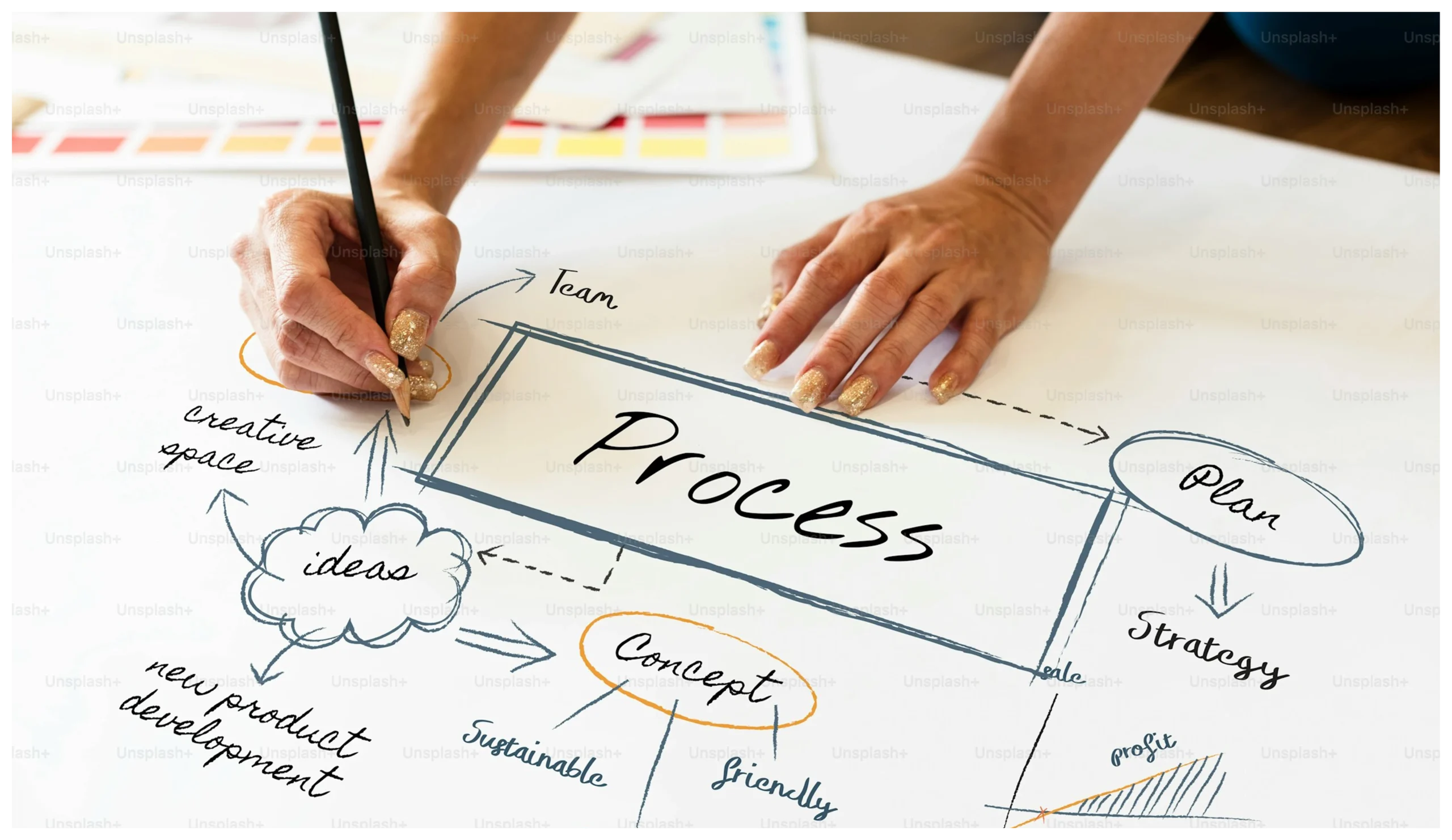
From Vision to Launch: Our Step-by-Step Web Design Process Explained

Creating a website is more than just placing text and images on a screen — it’s about crafting a digital experience that speaks to your brand, meets your goals, and engages your audience. 

At Uptouch Media Labs, we’ve designed a proven process that takes your idea from a simple vision to a fully functional, high-performing website. Whether you’re a startup or an established business, our step-by-step approach ensures clarity, collaboration, and results at every phase.

1. Discovery & Strategy

Every great website starts with understanding. In our discovery phase, we dive deep into your brand, target audience, and business goals. This is where we ask the right questions: 

  • What’s your value proposition? 
  • Who are your users? 
  • What do you want them to do on your site? 

From this research, we build a custom strategy tailored to your needs — one that outlines key features, user journeys, and content priorities. This step ensures that we’re building a site with purpose, not just aesthetics.

2. Wireframing & UX Design

With a clear strategy in hand, we move into wireframing — the blueprint of your website. This stage focuses on structure, layout, and user experience (UX). We sketch out the navigation flow, page hierarchy, and interactive elements to ensure every click has intention. 

Our goal is to make your website intuitive and easy to use. Before any visuals come into play, we validate the flow and functionality so users can move through the site seamlessly and find what they need quickly.

3. Visual Design & Branding

Now the creative magic begins. Our design team brings your brand to life with a compelling visual identity that reflects your values and captivates your audience. We choose fonts, colors, imagery, and animations that align with your brand voice. 

Each design is created in close collaboration with you, ensuring you’re part of the creative direction. At this stage, we also provide mockups for different screen sizes to guarantee a responsive and mobile-friendly experience.

4. Development & Testing

Once designs are approved, our development team transforms them into a live website using clean, efficient code. We build for speed, accessibility, and performance — ensuring your site works flawlessly on all devices and browsers. 

During this stage, we also integrate any necessary tools like content management systems (CMS), contact forms, booking systems, or e-commerce functionalities. Every feature is tested thoroughly for bugs, broken links, or usability issues before launch.

5. Launch & Support

It’s launch time — but our work doesn’t end there. After your site goes live, we conduct a final performance check and ensure everything runs smoothly. We also provide training (if needed) so you can manage your content with ease. 

Need ongoing support or future updates? We offer maintenance plans to keep your site secure, updated, and optimized. Your digital presence is now ready to make an impact, and we’ll be right beside you as it grows.

Whether you’re revamping an existing site or starting from scratch, our web design process is built to guide you every step of the way — from first idea to flawless launch. Let’s bring your vision to life. 

Ready to get started?

How a High-Converting Website Can Become Your 24/7 Sales Machine

In today’s digital economy, your website is more than just an online brochure — it’s your best salesperson. Unlike traditional sales reps, your website doesn’t sleep, take breaks, or go on vacation. It works 24/7, nurturing leads, closing deals, and building trust with potential customers. But for this to happen, your website must be optimized not just for aesthetics, but for conversion.

In this blog, we’ll break down how a high-converting website becomes a sales machine, the critical components it needs, and actionable tips you can start using today.

What is a High-Converting Website?

A high-converting website is one that effectively turns visitors into leads, and leads into paying customers. It’s built with purpose — every page, every element, every piece of copy is strategically designed to move users through a conversion funnel.

Conversion doesn’t always mean an immediate sale. It could be:

  • Signing up for a newsletter
  • Booking a consultation
  • Downloading a free resource
  • Making a purchase

The key is that the website is constantly helping visitors take the next step in their customer journey, automatically and around the clock.

Why Your Website Needs to Work Like a Sales Machine?

  1. Your audience is always online — Even when you’re asleep, people in different time zones or those browsing late at night are checking out your business.
  2. Consumers research before they buy — A high-converting website educates, builds credibility, and answers questions so potential customers feel confident.
  3. First impressions are digital — In most cases, your website is the first interaction a customer has with your brand. Make it count.

2. Strategic Call-to-Actions (CTAs)

CTAs are the closing lines of your website’s sales pitch. Every page should have a clear CTA — whether it’s to “Book a Demo,” “Download the Guide,” or “Shop Now.”

Tip: Make CTAs stand out with contrasting colors, action-oriented words, and strategic placement (above the fold, after benefits, near testimonials).

3. User-Centric Design and Seamless Navigation

A good user experience = more conversions. Your design should guide users naturally from interest to action.

Tip: Use visual hierarchy, intuitive menus, and consistent layouts. Avoid clutter. Think “How can I make this easier for the user?”

4. Lead Capture Systems

Include high-value lead magnets such as:

  • Free eBooks or guides
  • Email courses
  • Exclusive discounts
  • Free trials or consultations

Tip: Use exit-intent popups or embedded forms to catch interested users before they bounce.

5. Trust-Building Elements

Before users take action, they need to trust your brand. Add:

  • Testimonials
  • Case studies
  • Social proof (logos, follower counts, reviews)
  • Certifications and guarantees

Tip: Include real photos, video testimonials, or short case study success stories to increase emotional connection.

6. SEO Optimization

Your sales machine can’t work if no one visits it. Search Engine Optimization brings organic traffic your way, day and night.

Tip: Target long-tail keywords, create high-quality blog content, and optimize meta titles/descriptions for each page.

7. Speed and Mobile Optimization

Slow and non-responsive sites kill conversions. Your site should load in under 3 seconds and look great on any screen.

Tip: Use tools like Google PageSpeed Insights to test and improve your performance.

How to Measure Your Website’s Sales Performance

To truly operate like a 24/7 sales machine, you must track key performance indicators (KPIs) such as:

  • Conversion rate (visitors vs. actions)
  • Bounce rate
  • Average session duration
  • Cart abandonment rate
  • Leads generated/month

Use tools like Google Analytics, Hotjar, or HubSpot to gain insights and continuously optimize your pages.

Your Website is the Salesperson You’ve Been Looking For

When built strategically, your website can be the most efficient salesperson on your team. It doesn’t clock out. It doesn’t get tired. It’s always ready to sell — at 3 PM or 3 AM.

So ask yourself:

Is your website working for you or against you?

If it’s not generating leads, building trust, or converting visitors, it’s time to upgrade it into a high-converting, 24/7 sales machine.

Why Your Business Website Is Underperforming—And How Strategic Web Design Fixes It

In today’s digital world, your website is often the first impression potential customers have of your business. But what happens when that first impression falls flat? Maybe your site looks decent, but leads aren’t converting. Traffic is low. Bounce rates are high. Something just isn’t working.

The truth is: an underperforming website can silently cost you customers, credibility, and cash. The good news? Strategic web design can turn that around.

Let’s dive into why your website may be underperforming  and how thoughtful design can help fix it.

1. Poor First Impressions

Visitors shouldn’t have to “figure out” your website. If they can’t find what they’re looking for in a few clicks, they’ll leave.

What Fixes It:

  • A clear and intuitive menu structure
  • Highlighting key pages (e.g. Services, About, Contact)
  • Using breadcrumbs or search features for larger sites
 Good design simplifies navigation, helping users get where they need to go effortlessly.

2. Lack of Clear Calls-to-Action (CTAs)

Even if your site looks great, it won’t convert if you don’t guide users toward action. Do you want them to call, book, subscribe, or buy? If it’s not obvious, they won’t do it.

What Fixes It:

  • Prominent buttons like “Book Now,” “Get a Quote,” or “Shop Now”
  • CTAs placed at strategic points across the site
  • Strong microcopy that tells users what happens next

Strategic CTAs drive engagement and move visitors from curious to committed.

3. Slow Loading Times

A slow website frustrates users and kills conversions. In fact, a 1-second delay can reduce customer satisfaction by 16%.

What Fixes It:

  • Optimized images and code
  • Reliable hosting

Minimal plugins and scripts
 Strategic design includes performance as a priority, not an afterthought.

4. Not Mobile-Friendly

More than half of website traffic comes from mobile devices. If your site isn’t responsive, you’re missing out — big time.

What Fixes It:

  • Responsive layouts that adapt to all screen sizes
  • Mobile-first design thinking
  • Clickable elements spaced for finger taps

Designing for mobile users ensures your business looks good and functions well everywhere.

5. Weak Content and Visual Hierarchy

Your message may be strong, but if it’s buried in cluttered layouts or endless paragraphs, it’s getting lost.

What Fixes It:

  • Clear visual hierarchy: headlines, subheadings, spacing
  • Bite-sized content broken up with visuals
  • Highlighting key benefits, not just features

Strategic design helps your message shine and makes your content easier to digest.

Designing for mobile users ensures your business looks good and functions well everywhere.

6. No SEO Strategy

A beautiful website doesn’t matter if no one can find it. Many underperforming websites have poor search engine visibility.

What Fixes It:

  • SEO-friendly design structure (headings, metadata, alt text)
  • Fast load speeds and mobile optimization (Google ranking factors)
  • Keyword integration in both content and code

Designing with SEO in mind ensures your website gets seen by the right audience.

7. Lack of Trust Signals

Without elements that build credibility, visitors may hesitate to do business with you.

What Fixes It:

  • Customer reviews and testimonials
  • Trust badges or certifications
  • Portfolio or case studies
 Strategic design incorporates trust signals that reassure visitors and boost conversions

Strategic Web Design Isn’t Just Pretty — It’s Purpose-Driven

A strategic website does more than just look good. It’s designed with purpose:

  • To attract the right audience
  • Guide them through a seamless experience
  • And convert them into loyal customers

At its core, strategic design is about alignment — aligning your business goals with the user’s needs and behavior.

Final Thoughts: Don’t Settle for “Good Enough”

If your website is underperforming, you don’t need to start from scratch — but you do need a strategic redesign. Every element on your site should work together to drive results.

And the best part? Once your design is working for you, your website becomes a growth engine — not just an online brochure.

5 Critical Features Every Corporate Website Must Have in 2025

In today’s fast-paced digital world, your website is more than just an online brochure—it’s your first impression, your best salesperson, and your customer service assistant all rolled into one. As we move further into 2025, corporate websites must evolve beyond just aesthetics. They need to be strategic, functional, and user-centric to attract, engage, and retain both existing and new customers.
Whether you’re revamping your current site or building a new one, here are five critical features your corporate website must have to stay competitive and customer-focused in 2025.

1. Mobile-First, Lightning-Fast Performance

More than 60% of all website traffic now comes from mobile devices. In 2025, your website must be mobile-first, not just mobile-friendly. This means your website should be designed with mobile users as the primary audience, with desktop users being secondary.

What to include:

  • Responsive design that adapts fluidly to all screen sizes
  • Mobile-optimized menus, buttons, and images
  • Touch-friendly navigation and clickable elements
  • Fast load times (under 3 seconds)

Why it matters:
 Google now prioritizes mobile-first indexing, meaning your mobile site is what gets ranked. A fast, seamless experience keeps visitors engaged and reduces bounce rates—crucial for both SEO and conversions.

2. Clear Value Proposition and CTA Above the Fold

You only have a few seconds to capture a visitor’s attention. That’s why it’s critical to communicate what you do, who you do it for, and why it matters—all without the visitor needing to scroll.

Key elements:

  • A bold, clear headline summarizing your value proposition
  • Subheadings or short supporting text explaining benefits
  • A high-contrast call-to-action (CTA) like “Book a Demo” or “Get Started”

Why it matters:
 First-time visitors should instantly know what your company offers. A clear CTA guides users on what action to take next, helping convert traffic into leads or customers.

3. SEO-Optimized, Conversational Content

Great content is what brings users in and keeps them coming back. But in 2025, content needs to serve two masters: search engines and humans. Your website copy should be keyword-optimized without sounding robotic.

Best practices:

  • Use long-tail keywords naturally in your headlines and body text
  • Incorporate FAQs and conversational language that matches how users search
  • Break up content with bullet points, headings, and visuals for better readability

Why it matters:
 SEO ensures your website can be found on search engines, while engaging content keeps visitors interested. The right mix turns organic traffic into lasting relationships.

4. Social Proof and Trust Signals

In an age of scams and misinformation, trust is currency. Users need to see that you’re credible before they decide to buy from or work with you.

What to include:

  • Testimonials from satisfied clients
  • Partner logos and certifications
  • Case studies with real results
  • Press mentions and awards
  • SSL security badges

Why it matters:
 People trust other people. Displaying real feedback and third-party validation builds confidence and removes doubt, making it easier for visitors to take the next step.

5. Interactive, Human-Centered User Experience

People want more than just information—they want an experience. Your website should feel alive and intuitive, creating a journey rather than a dead-end.

Features to consider:

  • AI-powered chatbots or live chat for instant assistance
  • Personalized content based on user behavior or location
  • Interactive elements like calculators, quizzes, or product configurators
  • Clean navigation with clear user flows (especially for B2B sites)

Why it matters:
 When users can engage with your site instead of just reading it, they stay longer, trust more, and convert at higher rates. A great UX turns curiosity into conversion.

Final Thoughts

In 2025, having a good-looking website is no longer enough. Your corporate site must be fast, clear, trustworthy, optimized, and built with the user in mind. These five features not only future-proof your digital presence but also help you attract new customers, retain existing ones, and stand out in a crowded market.

If you’re planning a redesign or want to audit your current site, use this checklist as your foundation. Investing in these features today means stronger growth and deeper customer relationships tomorrow.