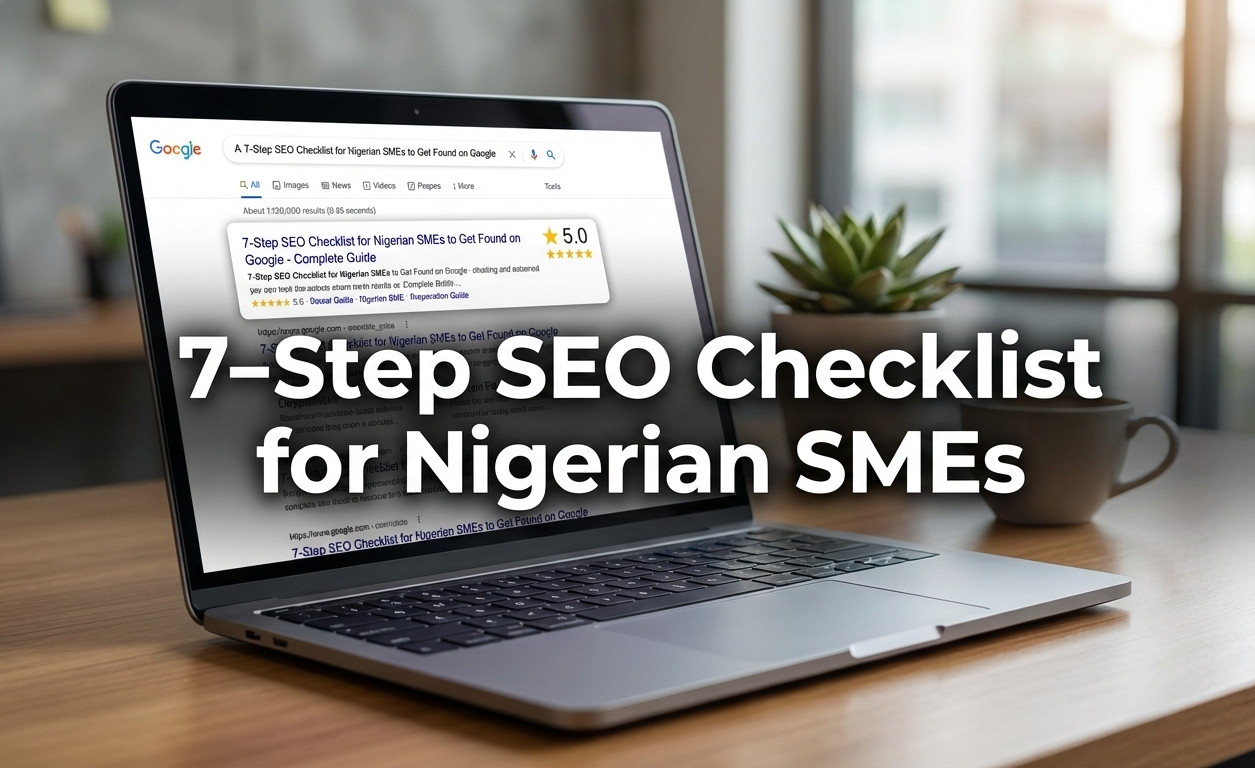
SEO Checklist for Nigerian SMEs: 7 Steps to Get Found on Google

An SEO checklist for Nigerian SMEs is essential for any business that wants to get found on Google. While having a website is important, the real challenge for many Nigerian SMEs is ensuring their customers can actually discover them online.

With increasing competition, rising ad costs, and more Nigerians searching online before making buying decisions, Search Engine Optimization (SEO) is no longer optional; it’s essential.

This checklist is for you if:

  • “You have a website, but no steady leads.”
  • “You rely heavily on Instagram or ads.”
  • “You want customers to find you organically on Google.”

Step 1: Set Up the Basics Correctly

Before advanced SEO tactics, ensure your foundation is solid. Without these tools, you are flying blind.

  • Install Google Analytics: Track where your visitors come from and what they do on your site.
  • Set up Google Search Console: Monitor your search performance and see which keywords bring people to you.
  • Submit Your Sitemap: Tell Google exactly which pages exist on your site.
  • Ensure Your Site Uses HTTPS: A secure connection is a ranking factor and builds trust.

Step 2: Do Keyword Research With Nigerian Search Intent

SEO starts with understanding what your customers are actually searching for.

Focus on keywords that reflect local intent, such as:

  • “Cleaning services in Abuja”
  • “Fashion designer in Lagos”
  • “Affordable catering services in Ibadan”

Tools to use: Google Autocomplete, Google Keyword Planner, or Ubersuggest.
Tip: Choose keywords with clear intent (e.g., “buy office chairs”) rather than just high volume (“chairs”).

Step 3: Optimize Your Website Pages (On-Page SEO)

Each page on your website should target one main keyword. Google needs to know exactly what a page is about within seconds.

  • URLs & Titles: Include your main keyword.
  • Clear Headings: Use H1, H2, and H3 tags to structure your content.
  • Meta Descriptions: Write a compelling “ad” for your page that shows up in search results.
  • Image Alt-Text: Give your images descriptive names so Google can “see” them.

Step 4: Create Helpful, Relevant Content

Google rewards websites that consistently provide value. As an SME, your content should answer the questions your customers are already asking:

  • How your service works or pricing explanations.
  • Industry tips (e.g., “How to effectively get rid of bedbugs”).
  • Case studies and FAQs.

Step 5: Master Local SEO (The Nigerian Advantage)

If you serve customers in specific neighborhoods or cities, Local SEO is your secret weapon. Most Nigerians search for “near me” or “[Service] in [City].”

  • Claim your Google Business Profile: Ensure your hours and phone number are 100% accurate.
  • NAP Consistency: Your Name, Address, and Phone number must be identical across your website and social media.
  • Reviews are Gold: Ask your happy customers to leave a review while they are still at your place of business.

Pro-Tip: Add a Google Map to your “Contact Us” page to help Google verify your physical location.

Step 6: Improve Website Speed and Mobile Experience

Most Nigerians browse the internet on mobile devices. Ensure your website:

  • Loads quickly, even on slow networks
  • Is mobile-friendly
  • Has simple navigation

Step 7: Build Credibility With Links and Mentions

Backlinks (where other websites link to yours) signal trust to Google.

  • List your business in credible Nigerian directories, such as VConnect or Connect Nigeria.
  • Collaborate with local industry blogs or news publications.
  • Quality matters more than quantity; one link from a reputable Nigerian site is better than 50 from random global sites.

Common SEO Mistakes Nigerian SMEs Should Avoid

  • Stuffing Keywords Unnaturally: Write for humans, not just robots.
  • The “Ghost Town” Profile: Setting up a Google Business Profile but never adding photos or replying to reviews.
  • Copy-Paste Content: Stealing text from foreign competitors. Google rewards original, local expertise.
  • Expecting Overnight Results: SEO is a marathon. The businesses that stay consistent are the ones that eventually own the market.

Case Study: How We Built a Lead-Generation Machine for Uptouch Cleaning Service

Proof that smart design + strategic SEO = Business Growth.

The Challenge

When we at Uptouch Media Labs took on the design for Uptouch Cleaning Service, they were invisible on search engines. They were stuck in the “social media hamster wheel,” only getting leads when they paid for ads.

Our Approach

To position Uptouch Cleaning Service for sustained organic growth, we implemented a focused, results-driven SEO strategy:

  • Mobile-First Website Design
    Built a fast, mobile-optimized website to match how Nigerian customers search and engage online.
  • Technical SEO Foundation
    Established a clean, secure, and crawl-friendly site architecture to support long-term search visibility.
  • XML Sitemap Submission
    Submitted structured sitemaps to ensure priority pages were discovered and indexed efficiently by Google.
  • Speed & Performance Optimization
    Optimized page load times to improve user experience, reduce bounce rates, and support higher rankings.
  • Clear Site Structure & Page Hierarchy
    Implemented logical content structure to help search engines quickly understand page relevance.
  • Intent-Driven Keyword Optimization
    Optimized pages around high-value, local search terms with clear commercial intent.
  • Meta Title Optimization
    Crafted keyword-focused titles to increase visibility in competitive search results.
  • Meta Description Optimization
    Wrote compelling descriptions designed to improve click-through rates, not just rankings.
  • Local SEO Alignment
    Strengthened location-based visibility by aligning website signals with Google Business Profile data.
  • Trust & Conversion Optimization
    Integrated reviews, clear contact paths, and enquiry forms to turn traffic into qualified leads.
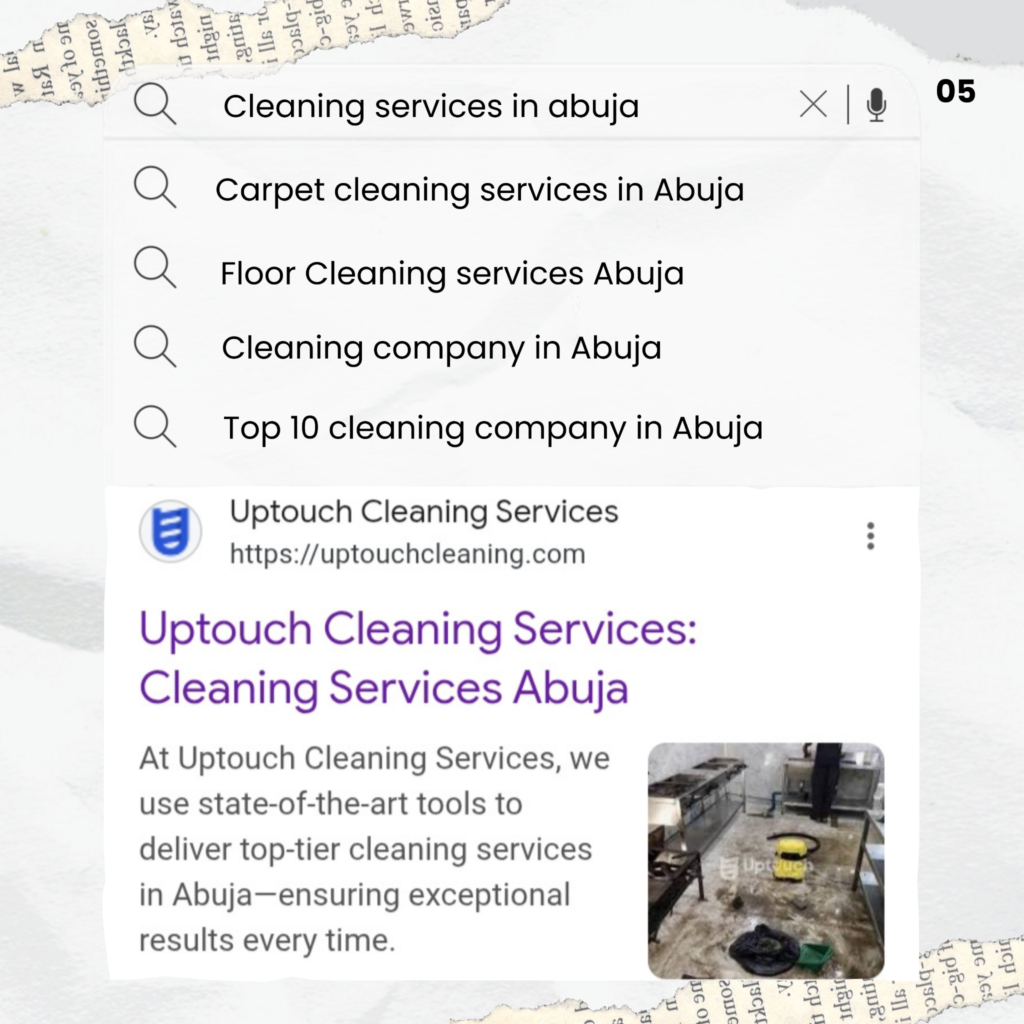
Google Page One ranking for a Nigerian cleaning service website

The Result

Uptouch Cleaning Service now consistently ranks on Page One of Google for multiple core service keywords. The business receives a steady flow of high-quality inbound enquiries directly from search without spending a Naira on paid advertising.

What started as a simple website project has become a reliable revenue-generating digital asset.

Stop Chasing Leads. Start Attracting Them.

SEO is one of the most cost-effective ways for Nigerian SMEs to attract consistent, high-quality customers. But you don’t have to do it alone.

At Uptouch Media Labs, we specialize in helping Nigerian businesses build visibility, authority, and growth through expert web design and smart SEO strategies. Whether you need a new website or want to fix your current search rankings, we are here to help.

Ready to get found on Google?

Click to book a free 30-minute SEO audit of your website. Let’s help you turn searches into customers.
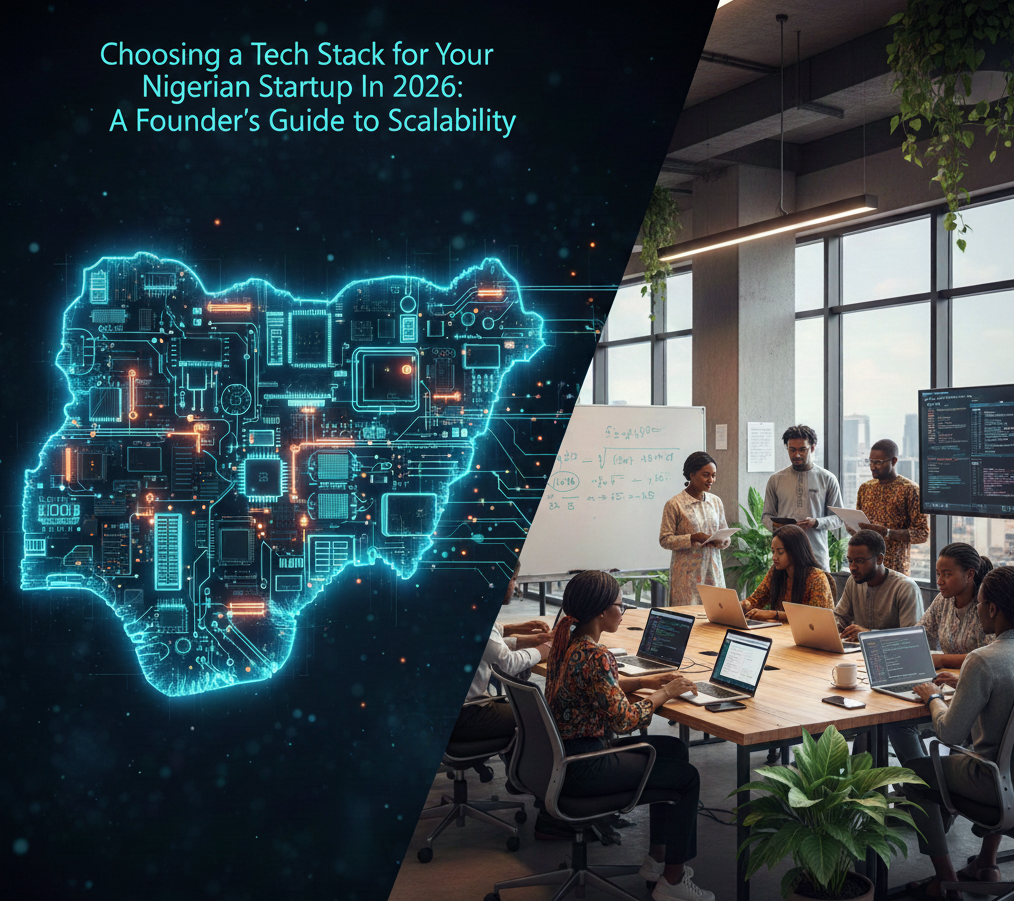
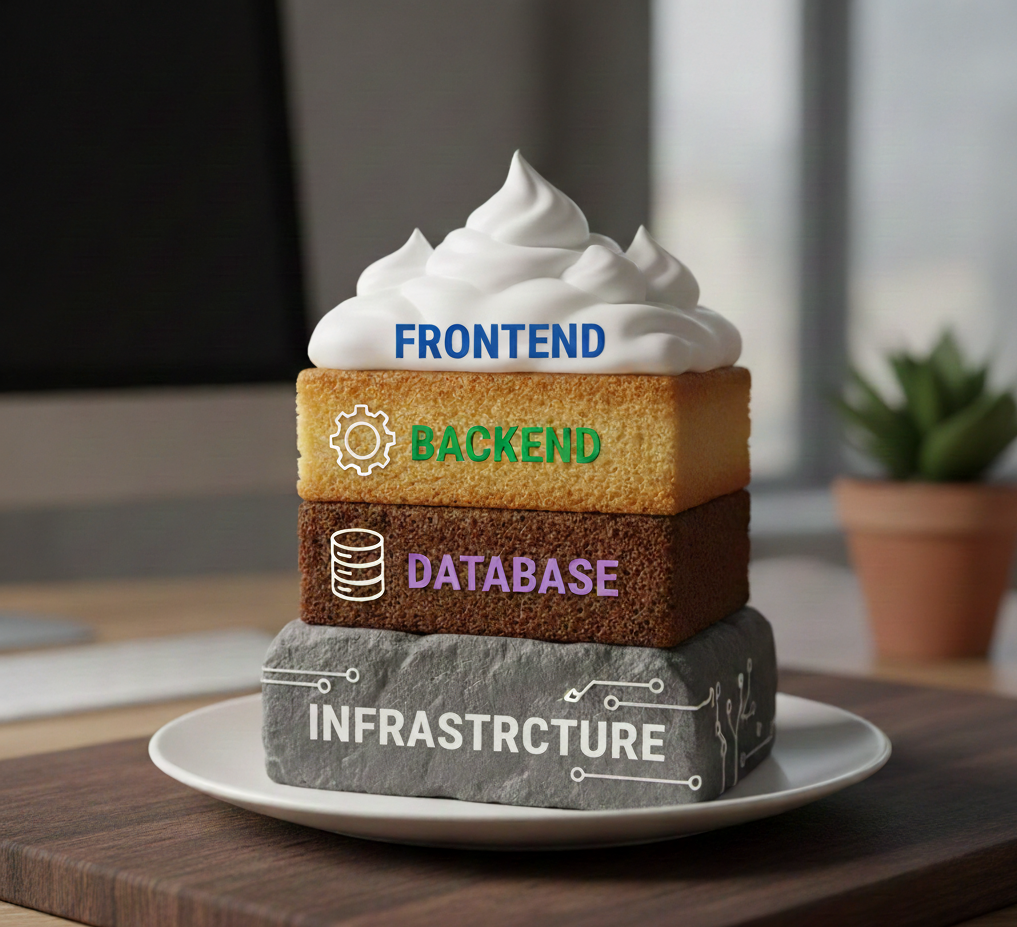
How to Choose a Tech Stack for Your Nigerian Startup In 2026: A Founder’s Guide to Scalability.

In Nigeria’s fast-growing digital economy, founders are building products that must operate in a challenging environment with inconsistent internet, rising operational costs, global competition, and users who expect speed, reliability, and simplicity from the outset.

Your tech stack determines whether your startup scales or crashes

It’s not just about what your developers prefer. 

It’s about selecting tools that align with your business goals, budget, team structure, and long-term vision.

This guide breaks down what Nigerian founders must consider when choosing a scalable tech stack in 2026.

What exactly is a “Tech Stack”?

A tech stack is the combination of tools and technologies used to build and run your product. It typically includes:

  • Frontend (user interface): Tools used to build what users see and interact with on a website or app. Examples: HTML, CSS, JavaScript, React, Next.js, Flutter.
  • Backend (business logic): Tools that power the behind-the-scenes functions like processing data, authentication, and API logic. Examples: Node.js, Express, Django, Laravel, Spring Boot.
  • Database (data storage and retrieval): Systems used to store, organize, and access application data. Examples: PostgreSQL, MySQL, MongoDB, Redis.
  • Infrastructure (hosting, DevOps, cloud): The environment where your app runs, including servers, deployment tools, and cloud services. Examples: AWS, Google Cloud, DigitalOcean, Docker, GitHub Actions.
  • Third-party integrations (authentication, payments, notifications): External services added to your app to enable specific features quickly and reliably. Examples: Paystack, Firebase Auth, Twilio, Stripe.

Why the Right Tech Stack Matters for Startups

Startups thrive on speed, flexibility, and scalability. A poor tech stack choice can lead to:

  • Slower development cycles
  • High infrastructure costs
  • Difficulty hiring developers
  • Poor product performance

But when chosen right, it becomes a strategic advantage.

Start With Your Business Needs, Not Technology.

Founders often begin with the wrong question:

“What framework should we use?”

The correct approach is to begin with:

“What business problem are we solving, and what capabilities does the solution require?”

Your stack should reflect:

A. The Stage of Your Startup

MVP stage: prioritize speed, affordability, and ease of iteration.

Growth stage: prioritize scalability, performance tuning, and modular architecture.

B. The Team You Have

Choose technologies your developers can work with confidently.

A skilled Node.js team will outperform a struggling Go or Java team every time.

C. Your Budget

Some technologies demand higher hosting fees, more specialized developers, or complex infrastructure.

Match Your Stack to Your Product Type

Different product categories require different capabilities. Below is a curated guide for Nigerian startups:

A. Marketplaces and Platforms (eCommerce, Logistics, Services)

Recommended:

Frontend: React or Next.js

Backend: Node.js (Express/NestJS) or Django

Database: PostgreSQL

Payments: Paystack or Flutterwave

Hosting: AWS or DigitalOcean

Why: Marketplaces require reliability, real-time updates, secure payments, and structured data handling.

B. Fintech Products

Recommended:

Backend: Java, Go, or Node.js

Database: PostgreSQL

KYC/Compliance: Dojah, IdentityPass

Hosting: AWS with strict security configurations

Why: Fintech requires high security, data integrity, compliance auditing, and transactional accuracy.

C. AI-Driven Products

Recommended:

AI/Backend: Python (FastAPI)

Frontend: React or Vue

Infrastructure: GPU-optimized cloud environments (AWS, GCP)

Why: AI workloads depend on strong Python ecosystems and powerful compute infrastructure.

D. Media, Content, and Streaming Platforms

Recommended:

Frontend: Next.js

Backend: Node.js or Django

Database: MongoDB

CDN: Cloudinary or Cloudflare

Why: These platforms require optimized media delivery, flexible content structures, and fast caching.

Prioritize Technologies With Strong Local Talent

Nigeria has a deep talent pool for:

Node.js

React / Next.js

Python (Django / FastAPI)

Laravel

Flutter

PHP

Choosing a stack with abundant local expertise reduces:

✔ Hiring difficulty

✔ Salary inflation

✔ Dependency on foreign developers

✔ Project delays

This is especially important for early-stage teams operating on tight budgets.

Plan for Scalability From Day One

Scalability is not just about handling more users; it’s about an architecture that supports growth.

Key scalability considerations:

  • Use cloud hosting instead of local servers (AWS, GCP, DigitalOcean).
  • Implement modular architecture or a “modular monolith” in early stages.
  • Use containerization (Docker) for easier deployment.
  • Add monitoring and logging (Sentry, Grafana, Datadog).
  • Adopt CI/CD pipelines for reliable releases.

Even if you don’t implement everything immediately, choose technologies that can evolve with increasing demand.

Cost Reality: Build With Nigerian Constraints in Mind

The Nigerian ecosystem requires founders to be mindful of:

  • Dollar-denominated cloud costs
  • SMS/OTP and API billing
  • Internet variability
  • Power fluctuations
  • Payment gateway uptime
  • Availability of affordable engineers

Choose a stack that allows you to maintain operations even during price fluctuations or infrastructure disruptions.

Avoid Over-Engineering

Many startups collapse under the weight of unnecessary complexity.


Avoid:

❌ Starting with microservices

❌ Using unfamiliar, trendy frameworks

❌ Overbuilding features for an unvalidated market

Start with:

✔ a simple backend

✔ a fast frontend

✔ a reliable database

✔ minimal third-party integrations

Your goal is to launch, learn from users, then scale.

The Tech Stack as Your Strategic Advantage

Your tech stack plays a central role in whether your startup will grow sustainably or struggle under pressure. 

The most scalable Nigerian startups build with:

✔ the right technology

✔ the right team strength

✔ the right architectural foundation

✔ the discipline to build lean and scale wisely

Choosing the right stack is not a technical decision alone; it is a strategic business decision that shapes the future of your company.

Ready to build a scalable digital product?

Uptouch Media Labs helps startups design, architect, and launch technology solutions built for growth.

👉 Book your FREE consultation today to start your project.